The Tea House at Morikami
Tucked into the gardens, the tea house is where Morikami hosts its seasonal tea ceremony demonstrations and programs — a quieter, more structured counterpart to strolling through Roji-en on your own.
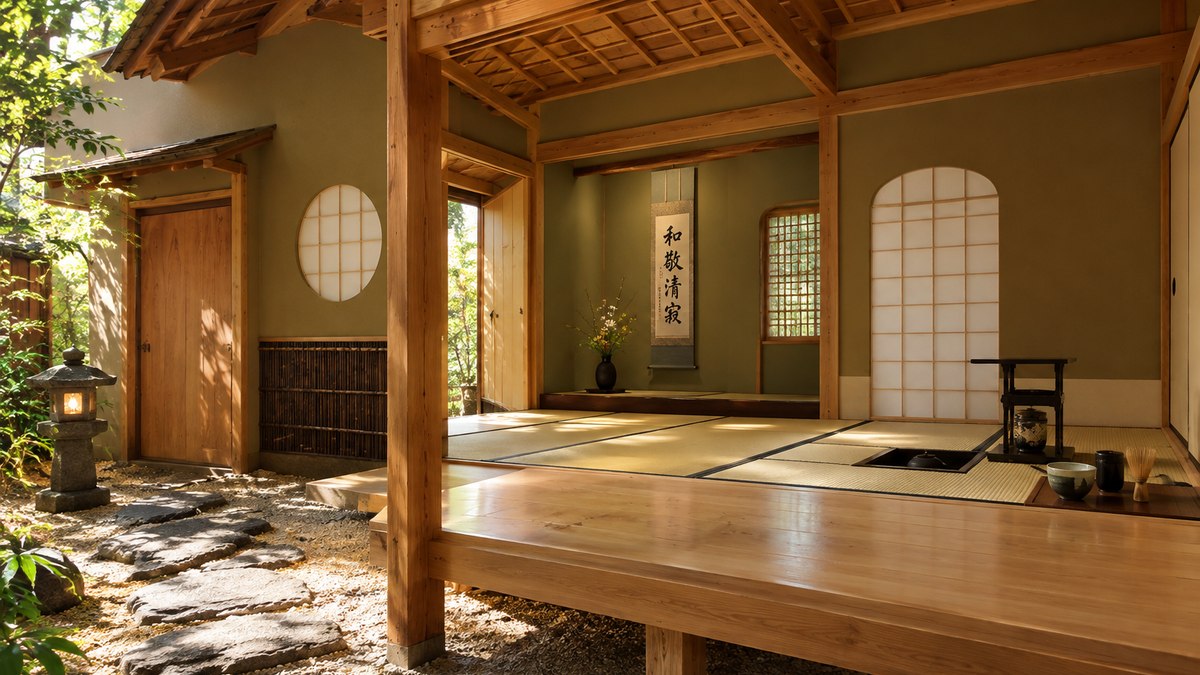
What's here
- Set within the garden grounds as a dedicated space for tea ceremony demonstrations.
- Programming runs seasonally rather than daily — check the museum's event calendar for scheduled dates.
- Grounds and exterior are viewable anytime during regular hours as part of a walk through the gardens.
Good to know
If a live tea ceremony is the reason for your visit, check morikami.org's events calendar or call ahead — demonstrations run on their own schedule, not daily.
The Seishin-an Tea House
Morikami's tea house carries the name Seishin-an, given to it by the 14th-generation grand tea master of the Omote-Senke school, one of Japan's principal traditions of tea ceremony — a naming that formally tied the building into a centuries-old lineage of practice rather than leaving it a generic garden structure. Funding for its construction came through the Grimes Foundation, whose support helped bring a building of proper traditional proportion and detail to the gardens rather than a simplified approximation.
Because the tea house was named and blessed within an established tea tradition, the demonstrations held there follow the same forms practiced at tea houses in Japan, giving Florida visitors a rare chance to see an authentic ceremony without traveling overseas.
The Art of Japanese Tea Ceremony
Japanese tea ceremony, known as chanoyu, is a ritualized practice built around the preparation and serving of powdered green tea, matcha, following a precise sequence of movements refined over centuries. Every gesture — how the tea utensils are handled, how the bowl is turned before drinking, how guests are seated — carries meaning within the ceremony, making it as much a meditative and social practice as it is a way of making tea.
The Omote-Senke school, the tradition tied to Morikami's tea house, is one of the oldest and most prominent schools of Japanese tea ceremony, tracing its lineage back through generations of hereditary tea masters. Demonstrations at Seishin-an give visitors a chance to see that lineage practiced in person rather than only reading about it.
Visiting Outside a Demonstration
A scheduled ceremony isn't required to make the tea house worth a stop — its grounds and exterior are viewable anytime during regular garden hours, set within Roji-en's landscaping like any other garden feature. Even without a live demonstration, the building's traditional architecture and setting make it a natural pause point on a walk through the gardens.
For visitors who do want to catch an actual ceremony, timing the trip around the museum's published event calendar is the only reliable way to do it, since demonstrations run on a seasonal schedule rather than a fixed daily or weekly rhythm.
See the rest of the park
Tea House is one of 6 featured areas at Morikami Museum and Japanese Gardens.